
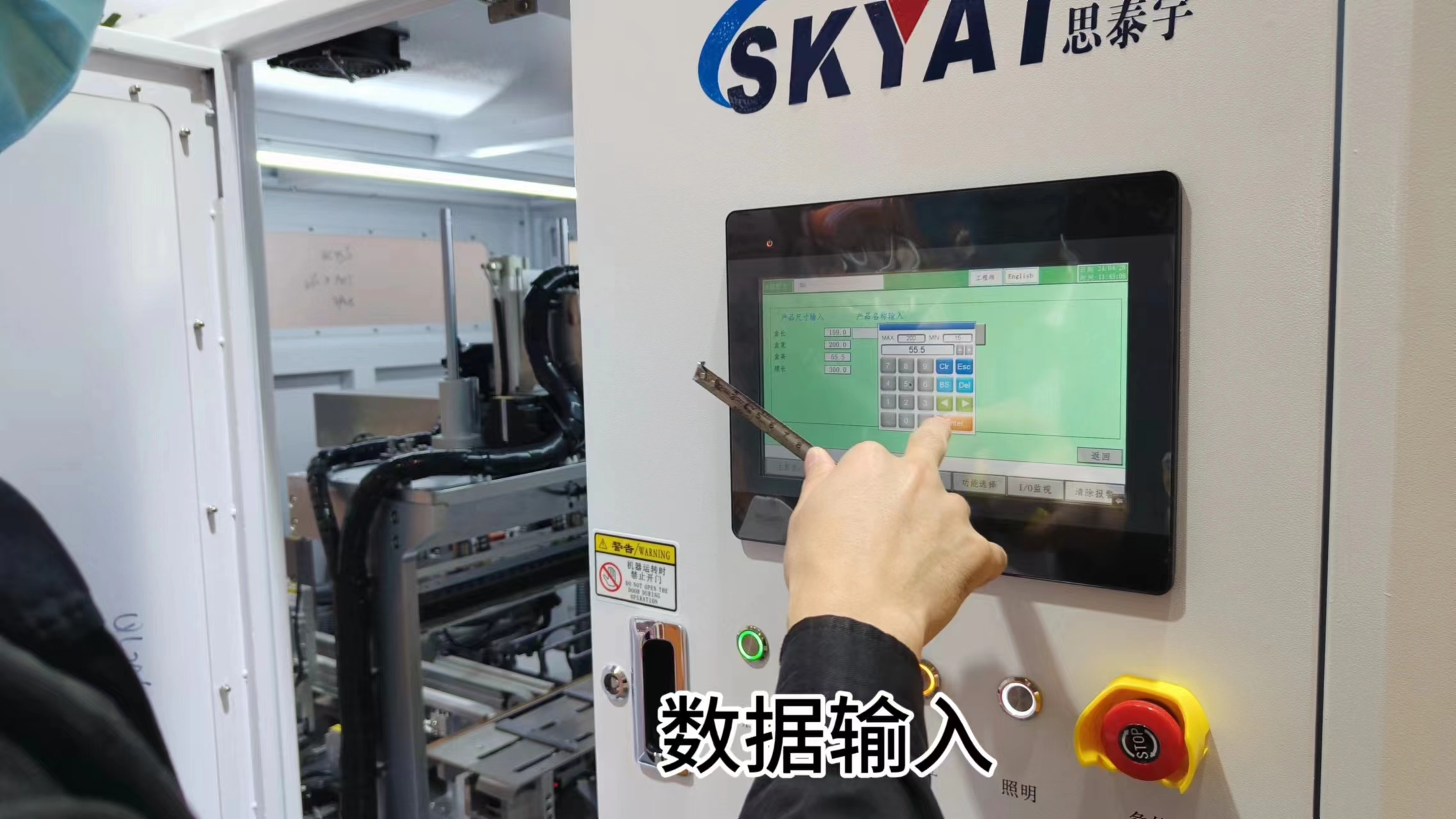
Intelligent Parameter Adjustment for Seamless Size Transitions
Modern smart shrink wrapping machines eliminate manual recalibration during product size changes through two integrated innovations.
Real-Time Sensor Feedback and PLC-Driven Dynamic Calibration
Laser sensors along with vision systems keep track of product dimensions like height, width and where things are positioned on the line. All this information goes straight into what's called a Programmable Logic Controller or PLC for short. The PLC then makes immediate changes to things like how long something gets sealed, how fast the conveyor belt moves, and even adjusts the tension in the packaging film. Take for instance when production switches between stiff cardboard boxes and those soft flexible pouches. The PLC handles the tricky part where materials bounce back after being compressed by adjusting the heat just right. This means we can maintain good seals even when there's about 15% difference in size from one item to another, all without needing someone standing there watching every detail.
Preloaded Size-Specific Recipes with One-Touch Changeover
The operators keep their best settings for packaging stuff like film tension levels, heat settings across different zones, and how fast the conveyor belts run stored in the machine's HMI database for every product code they handle. Just one touch on the screen pulls up the right recipe and makes all the necessary changes automatically. This saves roughly two thirds of the time compared to old fashioned mechanical adjustments and basically eliminates mistakes when entering numbers manually. On production lines that mix products - think beauty items next to tools or hardware - switching between completely different sized items takes less than five minutes now thanks to these automated systems.
Physical Adaptability: Conveyor, Film Path, and Sealing Geometry
Adjustable Conveyor Width, Height, and Speed for Irregular Shapes (Oval, Tubular, Unstable)
To handle oval containers, tubular items, or unstable loads, modern smart shrink wrappers feature dynamically adjustable conveyors:
- Width adjustment: Telescoping side rails support products from 2" to 24" wide
- Height calibration: Pneumatic lifts accommodate stacked or tiered items within ±2" tolerance
- Variable speed control: Encoder-driven motors reduce conveyor speed to 0.5 ft/min for top-heavy items, preventing toppling
Polymer-based conveyor belts with fabric cores enable tight-radius turns without sacrificing stability—critical for serpentine layouts handling fragile goods. In contrast, traditional steel-core systems increase jam risk by 27% with non-uniform loads.
Modular L-Bar vs. Continuous Sealer Configurations for Dimensional Flexibility
Two sealing architectures deliver distinct advantages for dimensional adaptability:
- Modular L-Bar Sealers: Excel with variable-height products (e.g., cosmetic kits and beverage cases). Independent heating zones support custom seal lengths (6"–48") and angular adjustments for tapered items—changeover takes less than 90 seconds via touchscreen presets.
- Continuous Sealers: Optimized for high-volume, uniform runs using heated wheels. While throughput reaches 50–75 units/minute, height flexibility is limited to ±15%.
| Feature | Modular L-Bar | Continuous Sealer |
|---|---|---|
| Max Height Variance | 300% | 15% |
| Changeover Time | <90 seconds | 15–20 minutes |
| Output (units/minute) | 20–30 | 50–75 |
L-bar systems reduce film waste by 40% during mixed-product changeovers; continuous sealers lead in throughput for standardized runs.
Thermal and Material Intelligence for Diverse Shrink Films
Auto-Calibrated Heat Profiles for Polyolefin, PVC, and POF Across Thickness Ranges
Modern shrink wrap machines can adjust their heat settings automatically when they detect what kind of film is being used and how thick it is. For example, polyolefin films work best at around 120 to 150 degrees Celsius, whereas PVC needs much hotter temperatures between 160 and 200 degrees to properly shrink. When dealing with thicker materials over about 60 microns in thickness, these machines give them extra time in the heating zone but still keep everything under control so there aren't any weak spots or burned areas. The latest models come equipped with smart sensors that recognize different film characteristics as they go along, then tweak both the amount of heat applied and how long the product stays inside the heating chamber. According to various studies looking at packaging operations, this kind of intelligent adjustment can actually reduce wasted material by somewhere around 30 percent.
For irregular shapes, the system modulates airflow distribution across heating zones: thinner films (15–30 microns) receive shorter, targeted bursts to prevent burn-through, while maintaining tension control during shrinkage. This thermal intelligence ensures reliable wrap performance across polyolefin, PVC, and polyethylene films—essential for temperature-sensitive applications like pharmaceuticals and electronics.
Operational Validation: Dimensional Limits and Real-World Performance Benchmarks
Smart shrink wrapping machines have been tested extensively and they handle all sorts of product sizes without compromising on either speed or quality. These machines generally work well for products ranging between around 50 millimeters tall up to about 600 millimeters, and widths can go as wide as 500 millimeters too, while still keeping those seals intact. Looking at what industry leaders report, most machines process anywhere from 20 to 40 packages per minute on average. The good news is defects stay really low, usually under half a percent across top brands in the market.
Real-world deployments demonstrate ±2% dimensional tolerance during high-speed production of challenging forms—including tapered bottles and unstable assemblies. Stress testing confirms thermal stability over 100+ consecutive cycles and validated film savings of 15–18% through intelligent material usage.
| Validation Parameter | Performance Range | Industry Benchmark |
|---|---|---|
| Throughput Speed | 20–40 packages/minute | 25 packages/minute |
| Dimensional Tolerance | ±2% across size spectrum | ±3% industry average |
| Defect Rate | <0.5% at peak operation | 1.2% conventional systems |
| Energy Efficiency | 15–20% reduction | Baseline consumption |
These results underscore how intelligent systems outperform conventional wrappers—especially in environments requiring frequent, rapid product changeovers.
FAQ
What makes smart shrink wrapping machines efficient?
Smart shrink wrapping machines incorporate real-time sensor feedback and PLC-driven dynamic calibration to adapt instantly to size changes without manual input, making them highly efficient.
How do smart shrink wrappers handle irregular shapes?
They feature adjustable conveyors and advanced sealing options like modular L-Bar and continuous sealers that adapt to various shapes and sizes quickly.
What types of films can these machines handle?
They can adjust their heat profiles automatically to accommodate different films, including polyolefin, PVC, and polyethylene, across various thickness ranges.
Are these machines suitable for high-speed production?
Yes, they are designed to maintain speed and quality across a broad range of product sizes and can process 20 to 40 packages per minute.