
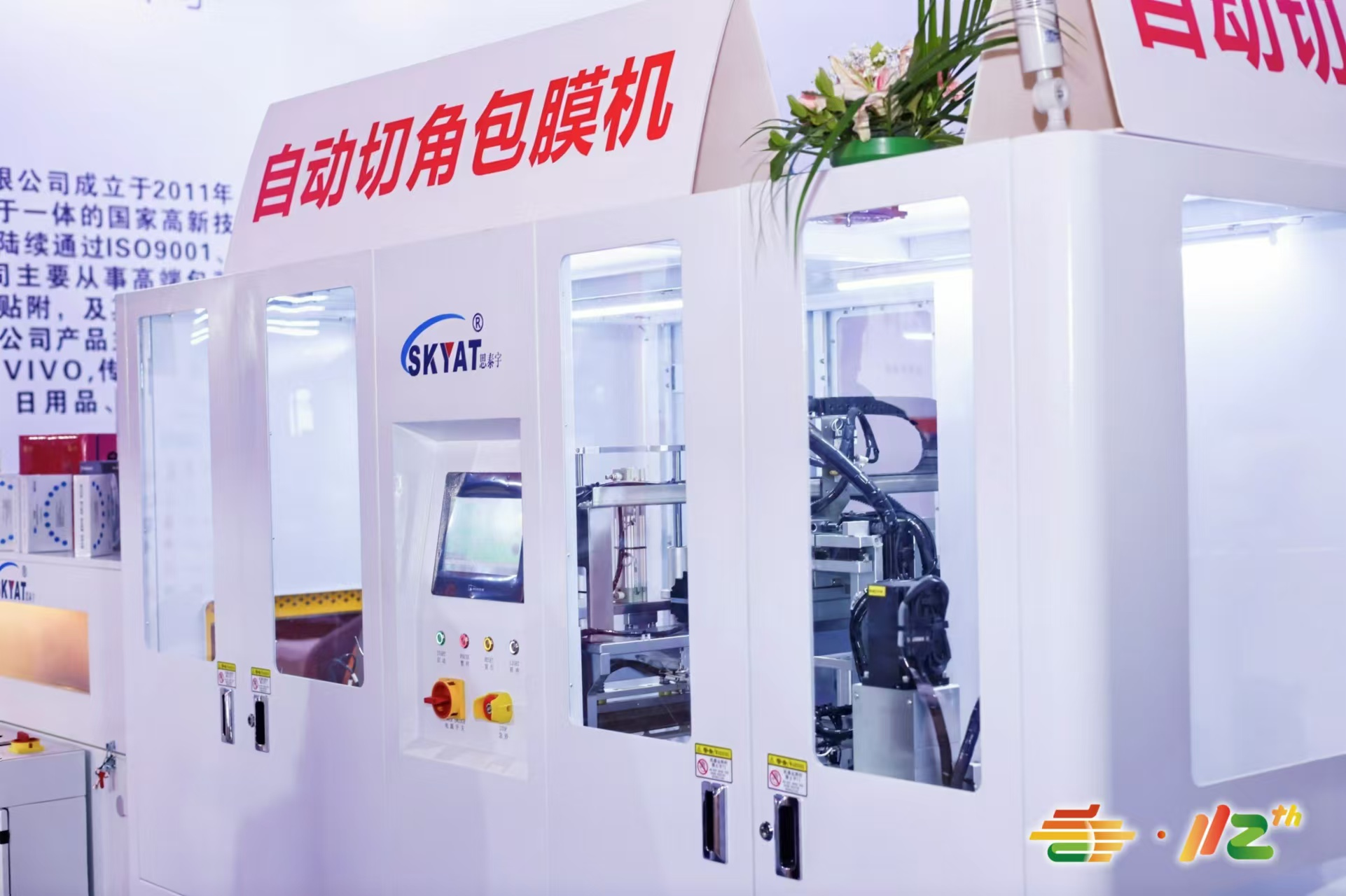
Match Your Shrink Wrap Machine to Production Needs
Throughput, Product Dimensions, and Stability Requirements
Your machine must align with daily output targets and product variability. Operations under 100 packs/day may rely on manual methods, but volumes exceeding 250 units/day typically require semi-automated systems. Irregularly shaped items benefit from customizable film tension controls, while standardized products gain efficiency from automated feeding. For bulky or unstable loads, reinforced seals with adjustable pressure settings are essential to prevent transit damage—ensuring integrity without compromising throughput.
Scalability: Aligning Today’s Volume with Future Growth Plans
Choose modular systems designed to scale alongside your business. Companies anticipating rapid growth—such as a jump from 500 to 5,000 units/day—should prioritize features like programmable conveyor speeds or pre-engineered interfaces for robotic arm integration. Hybrid automation supports phased upgrades from semi- to fully automatic operation, preserving capital and avoiding premature replacement.
Space, Labor, and Automation Level: Manual to Fully Automatic Options
| Automation Type | Ideal Output | Labor Impact | Space Footprint |
|---|---|---|---|
| Manual | <100/day | High | Compact |
| Semi-Automatic | 100–500/day | Moderate | Medium |
| Fully Automatic | 500+/day | Minimal | Large |
| Manual systems cap output at ~10 packs/minute and suit small-batch or seasonal needs. Semi-automatic machines reduce labor dependency while maintaining flexibility across SKUs. Fully automatic solutions deliver peak throughput and consistency but require higher upfront investment—best justified in continuous, high-volume environments. |
Compare Shrink Wrap Machine Types and Core Specifications
I-Bar vs. L-Bar Sealers: Cycle Time, Film Efficiency, and Sealing Geometry
I-bar sealers rely on operator positioning beneath a heated bar that cuts and seals in one motion. Economical for low-volume use (5–10 packs/minute), they lack precision in film tension control—leading to higher waste and inconsistent seals. L-bar sealers automate film feed, sealing, and cutting, achieving cycle times 3–5× faster and reducing film consumption by 15–25% through calibrated tensioning. Their overlapping seal geometry also better conforms to irregular shapes, whereas I-bars produce straight-line seals ideal only for uniform rectangular boxes. For operations scaling beyond 250 units/day, L-bar systems significantly improve throughput stability and labor efficiency.
Open-Side vs. Total-Closure Packaging: Application Fit and Output Flexibility
Open-side machines partially wrap products—leaving one side exposed—to accelerate packaging for non-sensitive items like books or trays. This configuration boosts output by up to 30% versus total-closure alternatives but offers limited protection against moisture, dust, or handling stress. Total-closure systems fully encapsulate products, delivering critical barrier integrity for electronics, pharmaceuticals, or sterile goods. Though slightly slower, they accommodate variable product heights without retooling. Given that compromised packaging contributes to an estimated $740,000 in annual losses from damaged goods (Ponemon Institute, 2023), facilities handling fragile or regulated products consistently favor total-closure systems for risk mitigation.
Select Compatible Shrink Film for Performance and Compliance
PVC, Polyolefin (PO), Polyethylene (PE), and PP: Heat Response, Clarity, and Regulatory Fit
Shrink film selection hinges on matching thermal behavior, optical performance, and regulatory alignment to your application and equipment. PVC delivers high clarity and seals at relatively low temperatures (120–160°C), but its use is restricted to non-food applications due to regulatory concerns. Polyolefin (PO) offers excellent clarity, flexibility, and FDA compliance for food contact, activating within a medium range (140–180°C). Polyethylene (PE) handles medium-to-high heat (150–200°C) and excels in durability for heavy bundling, though clarity is moderate. Polypropylene (PP) requires the highest activation temperatures (160–210°C) but provides superior transparency and universal food safety certification. Always verify compatibility between film specifications and your machine’s thermal capabilities—and confirm adherence to relevant standards, including USDA guidelines where applicable.
Evaluate Critical Components That Impact Reliability and Seal Quality
Seal integrity is the cornerstone of packaging performance: industry data shows 70% of product protection failures stem from compromised seals. Three components directly determine reliability:
- Heating elements must sustain ±3°C temperature consistency to uniformly activate film polymers; deviations cause weak seals or film tears
- Pressure systems require precise calibration (typically 15–50 psi) to ensure full film adhesion without deformation
- Cooling mechanisms must rapidly stabilize seals post-formation—delayed cooling permits molecular relaxation and seal weakening
Material compatibility is equally vital. For example, polyolefin films demand higher sealing temperatures than polyethylene, and mismatched pressure can create micro-leak channels. Weekly seal-strength testing per ASTM F88 helps detect drift early—top-performing facilities report 30% fewer defects after adopting this practice.
| Failure Cause | Impact | Prevention Strategy |
|---|---|---|
| Temperature fluctuation | Partial seals | Daily thermal validation |
| Contaminated seal bars | Channel leaks | ISO-grade cleaning protocols |
| Material degradation | Brittle seals | Film lot compatibility checks |
Proactive maintenance of these interdependent systems reduces film waste by up to 22% and extends equipment service life. Consistent seal quality reflects not just hardware—but the precision-controlled synergy of thermal, mechanical, and material variables.
Calculate True ROI: Beyond the Shrink Wrap Machine Purchase Price
Evaluating a shrink wrap machine solely by its sticker price overlooks long-term operational economics. True ROI emerges across three interrelated pillars over a 3–5 year horizon:
Labor Savings, Film Waste Reduction, and Maintenance Costs Over 3–5 Years
Labor accounts for 30–50% of total packaging costs. Automating sealing processes can cut manual handling by 60–70%, delivering measurable payroll savings. Simultaneously, advanced tension control and precision cutting reduce film waste—an often underestimated expense where optimized machines achieve 15–25% material savings versus manual or entry-level systems. Maintenance expenses diverge sharply: industrial-grade components—such as hardened steel seal bars and ceramic-heated elements—resist wear and extend service intervals, while lower-tier models incur $3,000–$5,000 annually in parts, labor, and unplanned downtime. Modeling these variables reveals whether a premium investment pays for itself—or whether a “budget” machine becomes a costlier liability over time.
FAQ
Q1: What factors should I consider when selecting a shrink wrap machine?
A: Important factors include daily throughput, product dimensions, stability requirements, scalability, available space, labor impact, and level of automation.
Q2: How can I ensure that my shrink wrap machine meets future growth needs?
A: Opt for modular systems that allow for phased upgrades and consider features like programmable speeds or robotic arm integration for scalability.
Q3: What are the differences between manual, semi-automatic, and fully automatic shrink wrap machines?
A: Manual systems are labor-intensive and best for small-batch needs. Semi-automatic machines offer flexibility and reduced labor dependency, while fully automatic systems deliver high throughput and consistency but need higher investment.
Q4: How do I choose the correct shrink film?
A: Consider thermal behavior, optical performance, and regulatory fit for your specific needs, ensuring compatibility with your equipment's thermal capabilities.
Q5: What are critical components impacting shrink wrap machine reliability?
A: Key components include heating elements, pressure systems, and cooling mechanisms—each crucial for maintaining seal integrity.
Table of Contents
- Match Your Shrink Wrap Machine to Production Needs
- Compare Shrink Wrap Machine Types and Core Specifications
- Select Compatible Shrink Film for Performance and Compliance
- Evaluate Critical Components That Impact Reliability and Seal Quality
- Calculate True ROI: Beyond the Shrink Wrap Machine Purchase Price
- FAQ