
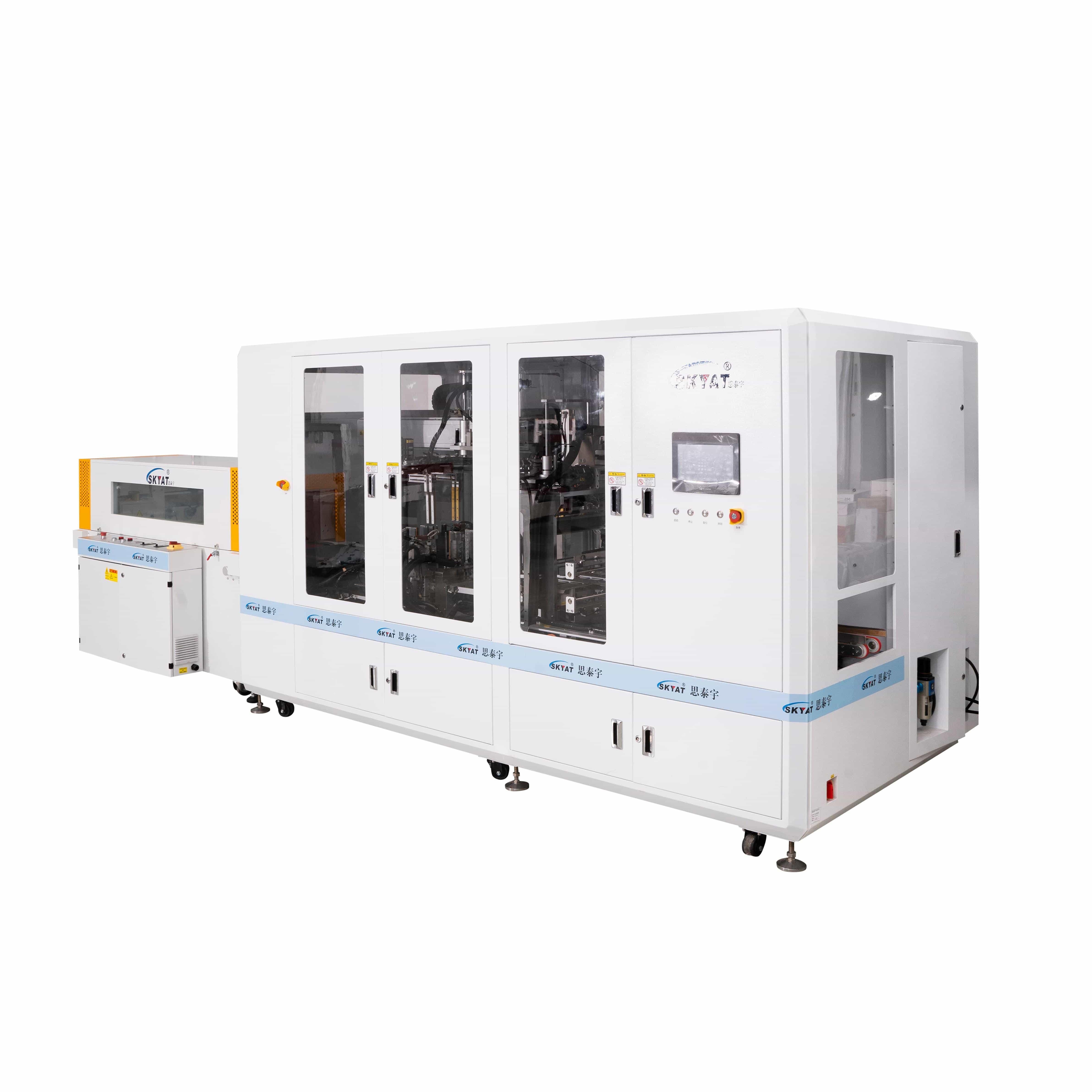
Manufacturing is undergoing a profound transformation driven by Industry 4.0, automation, and the relentless pursuit of operational excellence. Amid this shift, fully automatic corner cutting machines have evolved from niche packaging equipment to a core component of modern production lines—redefining efficiency, precision, and scalability for manufacturers across sectors. As global demand for streamlined packaging, consistent product presentation, and cost optimization surges, these machines are not just meeting current industry needs; they are shaping the future of how manufacturing businesses approach packaging and secondary production processes. For industries spanning 3C, consumer goods, food and beverage, cosmetics, and household appliances, fully automatic corner cutting machines are emerging as a non-negotiable investment for staying competitive in a digitized manufacturing landscape.
Precision and Consistency: The Foundation of Next-Gen Manufacturing
The most defining feature of fully automatic corner cutting machines—and the cornerstone of their future in manufacturing—is unrivaled precision. Unlike manual or semi-automatic alternatives, these intelligent machines leverage advanced sensors, programmable logic controllers (PLCs), and computerized calibration to execute corner cutting, film lamination, and sealing with micron-level accuracy. This precision eliminates human error, a common pain point in traditional packaging that leads to uneven cuts, wasted materials, and inconsistent product aesthetics. In the future, this accuracy will only be enhanced with AI-powered vision systems that adapt to real-time product variations, ensuring perfect cuts and lamination for every unit—regardless of size, shape, or material. For manufacturers, this level of consistency translates to higher product quality, reduced waste, and a polished brand image that resonates with retailers and consumers alike.
Integration with Industry 4.0: Creating Connected Production Ecosystems
The future of fully automatic corner cutting machines is intrinsically tied to the rise of smart manufacturing and Industry 4.0. Modern iterations of these machines are already designed for seamless integration with other automated production equipment—from conveyor systems and labeling machines to inventory management software—creating a fully connected production ecosystem. This connectivity enables real-time data tracking, including production speed, material usage, and machine performance, giving manufacturers actionable insights to optimize workflows and identify bottlenecks before they impact output. In the coming years, fully automatic corner cutting machines will incorporate more advanced IoT capabilities, allowing for remote monitoring, predictive maintenance, and autonomous parameter adjustments based on production demand. This level of digital integration will turn standalone packaging equipment into a smart node in the manufacturing process, driving greater operational agility and reducing unplanned downtime.
Versatility and Scalability: Adapting to Dynamic Manufacturing Demands
Today’s manufacturing landscape is defined by dynamic demand—short production runs, custom product lines, and rapid shifts in consumer preferences. Fully automatic corner cutting machines are built to meet this challenge, and their future lies in even greater versatility and scalability. Current models handle a wide range of products, from small cosmetic boxes and booklets to large household appliance packaging, with quick changeover times that eliminate costly retooling. Tomorrow’s machines will push this versatility further, with modular designs that allow for easy customization of cutting patterns, film types, and packaging styles—all controlled via intuitive touchscreen interfaces. For growing businesses, this scalability means the machine grows with production volume: it can handle low-volume custom runs and scale to high-speed mass production without compromising performance. This adaptability makes fully automatic corner cutting machines a future-proof investment for manufacturers looking to stay agile in an ever-changing market.
Sustainability and Efficiency: Aligning with Global Manufacturing Goals
Sustainability has become a core objective for manufacturers worldwide, and fully automatic corner cutting machines are poised to play a pivotal role in achieving eco-friendly production targets. These machines optimize material usage by cutting film to exact specifications, minimizing plastic waste and reducing the carbon footprint of packaging processes. Future iterations will feature even more energy-efficient motors and heating systems, alongside compatibility with recyclable and biodegradable packaging films—aligning with global efforts to reduce single-use plastic. Additionally, the automation of corner cutting processes slashes labor requirements and increases production efficiency, further reducing the overall energy and resource consumption of manufacturing operations. For businesses, this means meeting sustainability goals without sacrificing productivity or profitability—a win-win that will only grow in importance as regulatory and consumer demand for eco-friendly manufacturing intensifies.
In conclusion, fully automatic corner cutting machines are set to become an indispensable part of the manufacturing future, driven by their precision, Industry 4.0 integration, versatility, and sustainability. As manufacturing continues to digitize and global competition intensifies, these machines offer a clear path to optimizing packaging processes, reducing costs, and elevating product quality. For forward-thinking manufacturers, investing in state-of-the-art fully automatic corner cutting machines is not just a choice to improve current operations—it is a strategic move to build a scalable, efficient, and sustainable production model for the years ahead.