
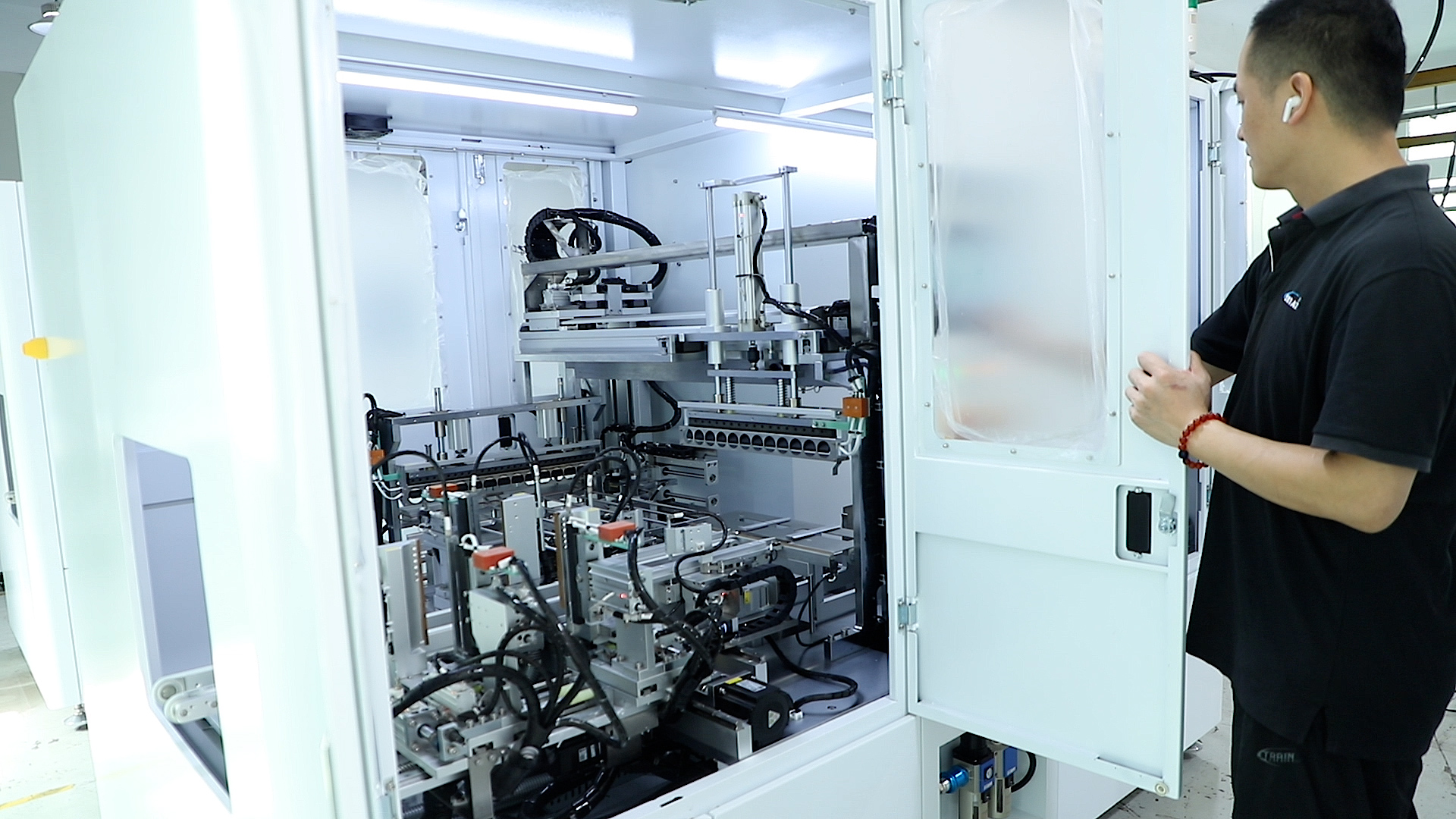
Enhancing Packaging Efficiency Through Intelligent Automation
Smart corner cutting wrapping machines are changing the game for packaging operations, swapping out old manual work for automated precision. The latest models come equipped with sophisticated sensors and smart control systems that handle complicated wrapping jobs roughly 30 percent quicker compared to traditional approaches. When factories cut down on hands-on work, they get consistent results batch after batch during large production runs. Plus, workers freed from repetitive tasks can focus more on checking product quality rather than just operating machinery all day long.
How Intelligent Corner Cutting Wrapping Machines Enable Smart Automation
Self-adjusting film tensioners and AI-guided cutting blades adapt in real time to irregular product shapes, eliminating traditional alignment errors. A prototype system tested in 2023 reduced film waste by 22% through millimeter-precise corner trimming, demonstrating how intelligent design enhances both speed and accuracy.
Integration of AI and Machine Learning for Packaging Optimization
Machine learning algorithms analyze operational data to optimize film usage and wrap cycles. According to a 2023 packaging automation study, AI-enabled systems reduce cycle times by 18% while maintaining seal integrity under variable temperature conditions.
IoT and Real-Time Control in Modern Wrapping Systems
Embedded IoT sensors monitor film consumption and motor loads, transmitting data to centralized dashboards. Operators can remotely adjust torque settings across more than 20 machine parameters, preventing 92% of film jams as observed in industrial trials.
Role of Robotics in Automated Wrapping Processes
Six-axis robotic arms now manage complex product rotations previously requiring manual repositioning. In automotive parts packaging, this integration increased throughput from 120 to 210 units per hour without expanding floor space.
Case Study: Productivity Gains in a Beverage Manufacturing Line
A European bottling plant achieved significant improvements after installing intelligent corner cutting systems:
- 34% faster label-to-wrap transitions
- 29% reduction in film expenditure
- Zero downtime due to misaligned seals over a 3-month period
These gains were sustained across continuous 24/7 operations, confirming the scalability of intelligent wrapping in high-speed FMCG environments.
Reducing Material Waste with Precision and Data-Driven Controls
Precision Film Application via Intelligent Corner Cutting Technology
Intelligent Corner Cutting Wrapping Machines minimize waste through millimeter-level accuracy in film application. Optical sensors and AI-driven algorithms analyze product dimensions in real time, adjusting tension and overlap precisely. This reduces stretch film overuse by 30% compared to manual methods, according to a 2023 industrial automation study.
Minimizing Overwrapping and Trim Loss Through Real-Time Data Adjustments
Integrated IoT sensors provide continuous feedback, enabling dynamic corrections during operation. The system automatically compensates for variations in film thickness or conveyor speed, reducing trim waste by 15–22%, as shown in benchmarks from leading manufacturers.
Balancing Upfront Investment and Long-Term Material Savings
Although these systems require a 20–35% higher initial investment, the savings from reduced film consumption typically offset costs within 3–5 years. A 2024 lifecycle analysis found that facilities processing 10,000 units daily save $18,000–$25,000 annually on materials after adoption.
Maximizing Uptime with Predictive Maintenance and Real-Time Monitoring
Intelligent corner cutting wrapping machines enhance production reliability by combining predictive analytics with real-time monitoring, reducing unplanned stoppages by up to 50%.
Remote Monitoring and Fault Diagnosis in Intelligent Wrapping Machines
IoT sensors track vibration, temperature, and motor performance, feeding data into centralized dashboards. An AI-powered fault detection system identified bearing wear patterns 48 hours before failure in a 2024 imec study, allowing preemptive maintenance during scheduled pauses and cutting troubleshooting time by 35%.
Intelligent Control Systems for Downtime Reduction
Self-adjusting torque controls and anomaly-detection algorithms prevent film tears caused by speed inconsistencies. When inconsistent tray dimensions are detected, machines recalibrate blade positions in under 0.8 seconds–12 times faster than human response. Facilities using these systems report 92% fewer jam-related halts (Packaging Digest 2023).
The Shift from Reactive to Predictive Maintenance in Packaging
Leading manufacturers have reduced emergency repairs by 67% since adopting condition-based maintenance. Instead of fixed replacement schedules every 500 cycles, smart wrappers assess actual component stress, extending seal bar lifespans by 22% through optimized timing (PMMI 2024).
Case Study: Achieving 30% Less Downtime After IoT Integration
A snack food producer retrofitted 12 intelligent wrappers with vibration sensors and cloud analytics. Machine learning models predicted conveyor motor failures with 94% accuracy, enabling off-shift repairs. Annual downtime dropped from 14.7 to 10.3 hours per line, resulting in $218,000 in annual savings across three facilities.
Energy Efficiency and Continuous High-Speed Operation
Energy-Saving Design in Intelligent Corner Cutting Wrapping Machines
Modern intelligent wrappers reduce energy consumption by 15–20% compared to conventional models, thanks to brushless DC motors and adaptive power management. Dynamic torque adjustments match energy output to real-time demand, minimizing idle-phase waste. A 2023 industry analysis reported 96% energy transfer efficiency during high-speed operation–22% better than older hydraulic systems.
Seamless Integration for 24/7 Operation in Modern Production Lines
IoT-enabled systems synchronize with production-line sensors to maintain speeds of 80–120 packages per minute, automatically adapting to flow variations. This eliminates bottlenecks in mixed-SKU environments, where manufacturers report 18% faster changeovers. Their modular design allows integration with existing conveyors and palletizers without facility rewiring.
Measuring Efficiency Gains in Packaging Through Performance Benchmarks
Key performance indicators highlight the impact of intelligent wrapping:
| Metric | Traditional Wrappers | Intelligent Wrappers | Improvement |
|---|---|---|---|
| Energy Consumption (kWh/unit) | 2.1 | 1.4 | 33% |
| Runtime Efficiency | 82% | 96% | 17% |
These results align with findings from industrial energy efficiency research, which show smart packaging systems recover upfront costs in 14–18 months through lower operational expenses. Real-time dashboards also help plants track sustainability metrics against ISO 50001 standards.
Ensuring Quality and Usability with Smart Design and Operator Support
Intelligent corner cutting wrapping machines combine precision engineering with user-centric design to ensure consistent quality and ease of operation. By integrating smart technologies and ergonomic features, they support both production excellence and workforce adaptability.
Automated Quality Control Using Advanced Sensors and Components
Vision systems and pressure sensors continuously monitor film tension, corner alignment, and seal integrity, detecting deviations as small as ±0.3mm. This closed-loop control prevents defective wraps without manual checks, with early adopters reporting 42% fewer quality rejections (Packaging Tech Quarterly 2023).
User-Friendly HMI and One-Touch Operation Features
Modern HMIs simplify operation through:
- Pre-programmed wrapping recipes for over 50 product profiles
- Animated troubleshooting guides for rapid error resolution
- Multi-lingual interfaces that reduce training time for seasonal staff
Training Strategies for Optimal Use of Intelligent Wrapping Systems
Manufacturers implementing structured training programs achieve 78% faster optimization than those relying on trial and error, according to a 2024 Packaging Efficiency Report. Effective training includes hands-on simulators, predictive maintenance drills, and cybersecurity protocols for IoT-connected equipment.
Modular and Flexible Design for Custom and Small-Batch Production Needs
Quick-change tooling and adjustable platforms allow transitions between product formats in under 25 minutes. This flexibility supports small batches (50–500 units) without compromising speed, making advanced automation viable for craft producers and large-scale operations alike.
FAQ
What are the benefits of using intelligent corner cutting wrapping machines?
These machines offer increased speed, reduce material waste, enhance precision, and allow for significant energy savings. They also diminish downtime through predictive maintenance and enable a scalable solution for high-speed production environments.
How do intelligent wrapping machines integrate AI and machine learning?
AI and machine learning optimize film usage, minimize cycle times, and maintain sealing integrity by analyzing operational data. The machines can adapt to variations in temperature and other conditions in real time.
What role do IoT sensors play in these systems?
IoT sensors track various machine parameters and conditions, allowing for real-time adjustments that prevent issues like film jams and machine inefficiencies. They contribute significantly to monitoring and optimizing machine performance.
Are these wrapping systems energy-efficient?
Yes, intelligent wrapping machines use advanced motor technologies and adaptive power management to significantly reduce energy consumption. They offer better energy transfer efficiency compared to older systems.
Table of Contents
-
Enhancing Packaging Efficiency Through Intelligent Automation
- How Intelligent Corner Cutting Wrapping Machines Enable Smart Automation
- Integration of AI and Machine Learning for Packaging Optimization
- IoT and Real-Time Control in Modern Wrapping Systems
- Role of Robotics in Automated Wrapping Processes
- Case Study: Productivity Gains in a Beverage Manufacturing Line
- Reducing Material Waste with Precision and Data-Driven Controls
- Maximizing Uptime with Predictive Maintenance and Real-Time Monitoring
- Energy Efficiency and Continuous High-Speed Operation
- Ensuring Quality and Usability with Smart Design and Operator Support
- FAQ