
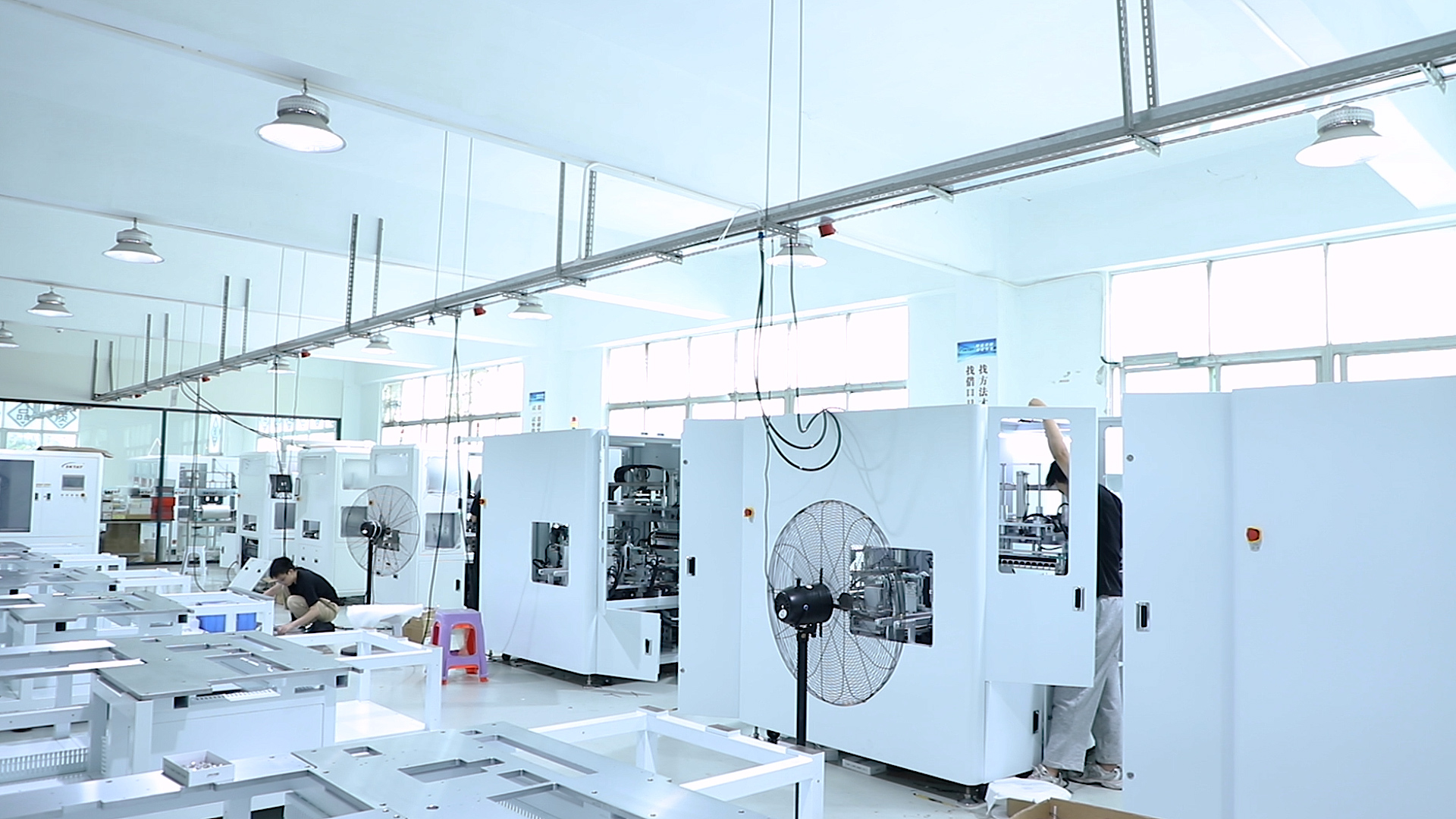
Revolutionizing Manufacturing Efficiency with Fully Automatic Corner Cutting and Laminating Machines
Modern manufacturing demands solutions that combine precision with relentless productivity. Fully automatic corner cutting and laminating machines achieve this balance through three transformative capabilities: seamless automation integration, continuous processing architectures, and intelligent resource optimization.
The Role of Automation in Industry 4.0 and Smart Factories
The move toward Industry 4.0 has really kicked things up a notch for production lines, boosting automation levels by around 22% since 2021 according to McKinsey's latest report. Corner cutting and laminating systems have become essential parts of modern manufacturing floors. When these machines connect with MES or Manufacturing Execution Systems, they allow factories to monitor product quality as it happens on the floor, cutting down on hands-on work by nearly four fifths in card manufacturing operations. Looking at numbers from a recent industry survey in 2023, companies that switched fully to automated lamination saw their turnaround times drop by about a third when compared with those still relying partly on manual processes.
High-Speed, Continuous Lamination: Reel-to-Reel and Card-to-Card Processing
Advanced machines now process 2,500+ sheets/hour in card-to-card mode and 50 linear meters/minute in reel-to-reel configurations. This throughput is achieved through:
- Servo-driven feeding systems eliminating alignment errors
- Instantaneous adhesive application with ±0.1mm precision
- Multi-stage curing chambers ensuring bond integrity at speed
A recent analysis of packaging automation trends shows continuous processing architectures reduce material waste by 18% compared to batch operations.
Maximizing Throughput and Minimizing Downtime in High-Volume Production
Tool-less changeover systems enable switching between 50+ product formats in <90 seconds, critical for manufacturers handling 100+ SKUs. Predictive maintenance algorithms analyze 15+ machine parameters to forecast component failures 400 operating hours in advance, maintaining 95%+ uptime across 3-shift operations.
Precision, Quality, and Consistency in Automated Cutting and Laminating Processes
Achieving Four-Corner Cutting Accuracy at Scale
The latest fully automatic corner cutters can hit tolerances down to around ±0.1mm thanks to their closed loop feedback systems and those fancy servo controls we all hear so much about these days. When compared to old school manual techniques, automated systems basically wipe out any inconsistencies in how the blades line up or how deep they cut. What does that mean? Every single piece comes out looking exactly like the one before it, even after running through thousands of cycles. Packaging parts need those perfect corners though. Without this kind of precision, there's a real risk of weak spots forming in the joints. And let's face it, keeping everything dimensionally consistent matters a lot when things have to fit together perfectly on an automated production line.
Uniform Lamination for Premium Surface Finish and Durability
Modern automated laminating systems work by regulating pressure dynamically while keeping tabs on temperatures in real time, which helps spread adhesives evenly down to the micron level. What this means is no more problems with patches where the adhesive didn't cure properly or those pesky air bubbles that can shorten how long products last. For high-end packaging applications, this kind of consistent application makes all the difference. The result? Smooth, shiny finishes free from those annoying ripples, even when working with tricky materials such as heat sensitive holographic foils or delicate textured films that would normally be difficult to handle.
Eliminating Human Error Through Full Process Automation
When companies eliminate those tedious manual handling tasks and adjustments, their fully automated systems slash defect rates down around 90% compared to what happens with semi-automated setups. The combination of robotic material loaders working alongside computer vision systems ensures everything lines up correctly before any actual cutting or laminating takes place. For industries dealing with expensive materials such as medical grade polymers, these automated solutions make all the difference. Just think about it one off-center cut on something worth thousands could mean throwing away over fifteen grand worth of specialized materials overnight. That kind of precision saves money while keeping production running smoothly day after day.
Cost Savings and Material Efficiency Through Intelligent Machine Design
Optimized Cutting Algorithms That Reduce Waste
Today's fully automatic corner cutting and laminating machines use smart path finding technology to cut down on wasted materials. These systems look at sheet sizes and what needs to be produced right as work happens, getting about 98 to almost 99 percent of materials used effectively. That's roughly 15 to maybe even 20 percent better than when people do it manually. The computer programs behind them focus on arranging pieces so there's less leftover scrap, all while keeping things accurate enough for production standards. This means companies spend less money on raw materials since so little gets thrown away during manufacturing.
For example, one study of automated manufacturing systems found that adaptive cutting patterns reduced PVC laminate waste by 22% annually in high-volume card production.
Long-Term ROI and Operational Cost Reduction in B2B Production
Automation slashes labor dependency—a single operator can manage 4–6 machines simultaneously—while energy-efficient motors cut power consumption by 30% compared to legacy systems. Factories report ROI within 12–18 months through:
- 40% faster job changeovers via programmable settings
- Zero downtime from misaligned cuts or lamination errors
- 15-year lifespan with predictive maintenance preventing unplanned repairs
This operational leanness makes fully automated systems indispensable for manufacturers scaling production without proportional cost increases.
AI, IoT, and Predictive Intelligence in Next-Gen Laminating Machines
Modern laminating systems now integrate AI, IoT, and predictive analytics to achieve unprecedented precision and efficiency. Fully automatic corner cutting and laminating machines use these technologies to reduce human intervention while optimizing material usage and operational uptime.
AI-Powered Decision Making and Adaptive Learning in Lamination Systems
Modern AI systems take in live sensor readings and tweak cutting angles, pressure settings, and temperatures as needed during operation. The machine learning aspect looks at past production runs too, so these smart systems get better at what they do after every batch goes through. Take a look at some recent industry reports from 2026 showing that factories using AI powered cutters waste about 15% less material compared to traditional methods, all while keeping measurements within just 0.1 mm of target specs. What makes these systems really valuable is their ability to handle different thicknesses without manual intervention. This matters a lot when working with layered materials where even small inconsistencies can cause major problems downstream in manufacturing processes.
IoT Integration for Real-Time Monitoring and Remote Control
IoT sensors connected across factory floors are now tracking over 30 different performance indicators including things like motor vibrations and how fast adhesives get spread out during production runs. All this information gets sent to central monitoring screens where operators can keep tabs on what's happening. Edge computing means factories aren't so reliant on distant cloud servers anymore. According to IDC research, around half of all industrial data processing could happen right at the source by mid next decade. We're already seeing this play out in today's laminating machines which respond to important changes in under 50 milliseconds most of the time. Manufacturers who want to stay ahead of the curve need to understand these trends as they reshape how plants operate day to day.
Predictive Maintenance to Maximize Uptime and Machine Lifespan
By analyzing wear patterns in servo motors and hydraulic components, AI models predict failures 72+ hours in advance with 92% accuracy (Gartner 2025). This shifts maintenance from calendar-based to condition-based schedules, extending machine lifespans by 3–5 years. Vibrational anomaly detection systems trigger automatic lubrication cycles, reducing unplanned downtime by 40% in high-throughput environments.
Sustainable and Future-Ready Automation in Packaging and Printing Industries
Manufacturers are increasingly turning to fully automatic corner cutting and laminating machines as part of their push for greener operations. The latest models cut energy use by around 40% when compared to older equipment thanks to smarter motor controls and heat recovery features according to the Packaging Trends Report from 2025. Looking at real world data, a study across 120 different manufacturing sites found something interesting last year. Plants that had adopted these automated lamination systems saw their yearly material waste drop between 18% and 22%. What's even better? They managed to keep production running hot at over 15,000 units per hour without slowing things down. This combination of efficiency gains and reduced waste makes these machines a smart investment for forward thinking companies concerned about both bottom lines and environmental impact.
Engineering Sustainable Design: Energy Efficiency and Longevity
Modern automated cutting systems achieve sustainability through dual innovations:
- Energy-efficient drives that adjust power consumption based on real-time load requirements
- Material optimization algorithms that minimize substrate waste during corner trimming
Industry research shows AI-enhanced pattern nesting in these machines reduces raw material usage by 23% on average compared to manual layouts. Leading systems now incorporate:
| Metric | Traditional Machines | Automated Systems |
|---|---|---|
| Energy Use (kWh/1000 units) | 85 | 52 |
| Material Utilization Rate | 78% | 94% |
| CO2 Emissions (tons/yr) | 42 | 28 |
Balancing Advanced Automation with Workforce Evolution
While automation handles repetitive tasks like reel-to-reel lamination, manufacturers report a 34% increase in demand for skilled technicians capable of managing hybrid workflows. Upskilling programs focusing on IoT diagnostics and predictive analytics help workers transition into supervisory roles overseeing multiple automated lines.
The Future of Smart Factories: Convergence of Robotics, AI, and Lamination Tech
Next-generation facilities integrate fully automatic corner cutting systems with cloud-based platforms that enable:
- Predictive maintenance powered by vibration and thermal sensors
- Real-time adhesive application adjustments using vision systems
- Remote quality control via 5G-connected inspection modules
This technological convergence aligns with market projections showing the packaging automation sector growing at 8.5% CAGR through 2033, driven by sustainable production mandates across 78% of global manufacturers.
Frequently Asked Questions (FAQ)
What are fully automatic corner cutting and laminating machines?
These machines are advanced industrial equipment that automate the process of cutting and laminating materials with high precision and efficiency, reducing human intervention.
How do these machines improve manufacturing efficiency?
By integrating automation, AI, and IoT technologies, these machines optimize material usage, minimize downtime, and maintain consistent product quality, leading to faster production times and reduced waste.
What industries can benefit from using these machines?
Industries such as packaging, printing, card manufacturing, and any sector requiring precise cutting and laminating can benefit significantly from these machines.
How do predictive maintenance features work in these systems?
Predictive maintenance uses AI and IoT to monitor machine performance in real-time, predicting potential failures before they occur, thus extending machine lifespan and reducing unexpected downtimes.
Are these machines environmentally friendly?
Yes, the latest models are designed with energy-efficient drives and material optimization algorithms, significantly reducing energy consumption and material waste compared to traditional machines.
Table of Contents
- Revolutionizing Manufacturing Efficiency with Fully Automatic Corner Cutting and Laminating Machines
- Precision, Quality, and Consistency in Automated Cutting and Laminating Processes
- Cost Savings and Material Efficiency Through Intelligent Machine Design
- AI, IoT, and Predictive Intelligence in Next-Gen Laminating Machines
- Sustainable and Future-Ready Automation in Packaging and Printing Industries
- Frequently Asked Questions (FAQ)