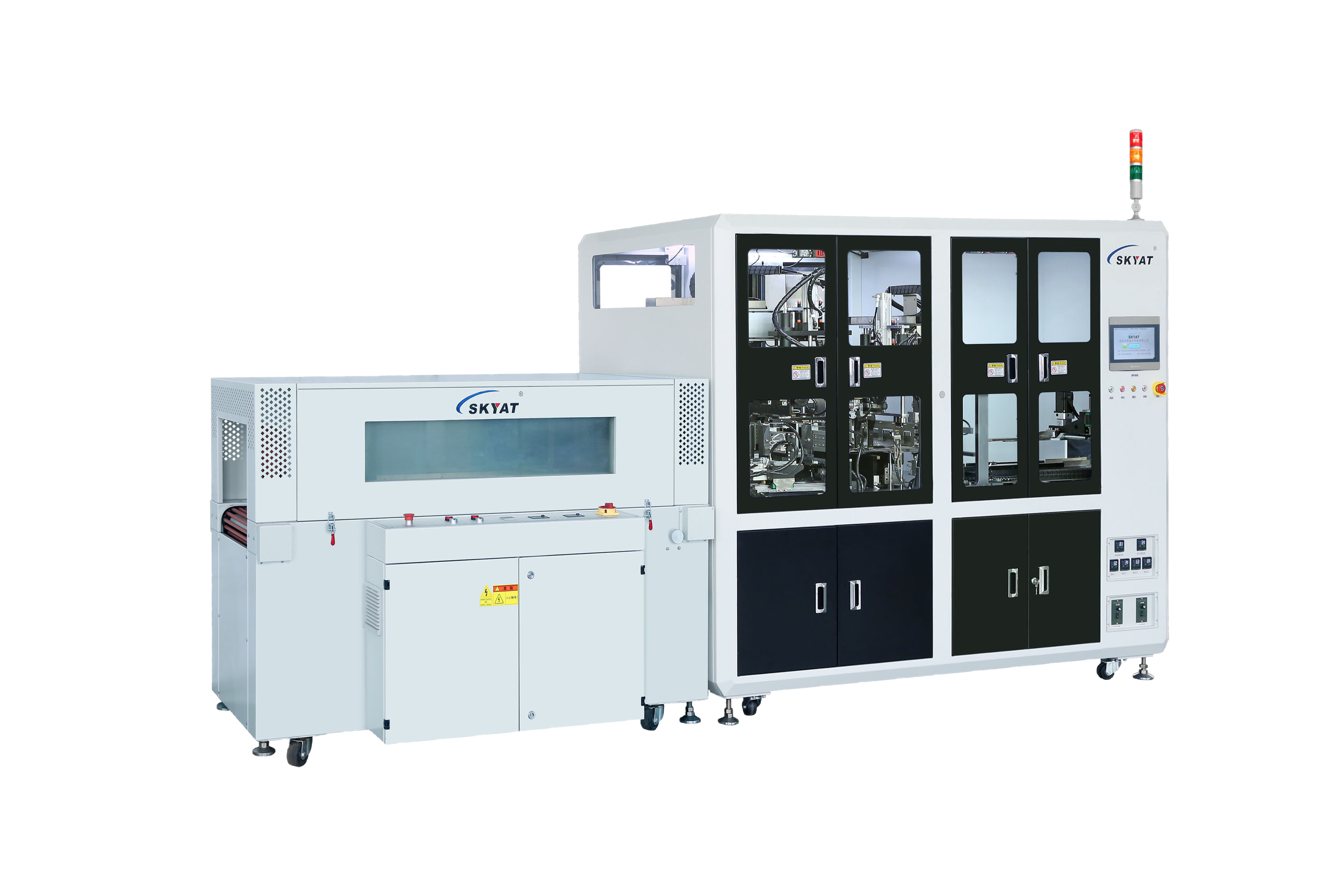
Assess Production Needs: Matching Automation Level to Volume and Consistency Goals
Semi-Automatic vs Fully Automatic Wrinklefree Shrink Wrapping Machines: Labor, Throughput, and Surface Finish Trade-offs
Semi automatic systems still need someone to load products manually, but they come at a much lower price point compared to fully automated options. They work best for smaller scale operations below 200 units per hour since having extra workers around can compensate for the slower speed. The catch is these machines really depend on skilled operators who know how to keep the film tight without causing problems. When people aren't careful enough, it leads to those annoying wrinkles right next to the sealed areas. On the other hand, fully automatic wrinkle free shrink wrappers have become quite advanced lately. These systems typically include conveyor belts and robotic components that can handle over 500 items an hour with defects dropping below 2%. What makes them stand out is their ability to maintain consistent tension throughout the process thanks to closed loop controls and adjustable heating zones. While these machines definitely cost more upfront (around 40 to 60 percent extra), most manufacturers find the investment pays off once production hits about 15 thousand units each month. The savings from needing far fewer staff members usually covers the difference pretty quickly.
Production Volume Thresholds That Demand Wrinklefree Shrink Wrapping Machine Capabilities
Below 5,000 units monthly, manual or semi-automatic systems suffice if minor wrinkles are acceptable. Beyond this threshold, inconsistent output quality directly impacts brand perception: studies show 68% of consumers associate packaging flaws with product inferiority. At 10,000+ monthly units, fully automated systems become essential:
- 5,000–20,000 units: Automated L-bar sealers prevent edge wrinkles through constant tension monitoring
-
20,000+ units: Integrated cooling tunnels and servo-driven film unwind systems maintain wrinklefree integrity at 30+ packages/minute
Operations exceeding 50,000 monthly units risk over $740,000 in annual rework costs without industrial-grade automation. Scalability analysis should factor in 3-year volume projections—undersized machines create bottlenecks costing 18% in lost throughput during peak demand.
Optimize Sealing and Shrinking Technology for a True Wrinklefree Finish
I-Bar vs L-Bar Sealers: Precision Film Tension Control for Seamless, Wrinklefree Seals
The I-bar sealer works with just one heated bar to create those straight line seals we need for flat products where not much tension tweaking is required. Then there's the L-bar system which actually has both vertical and horizontal arms that wrap around all sorts of odd shapes. These systems apply what they call dynamic tension control so the film doesn't slip around, which is basically why most packages end up wrinkled anyway. When dealing with round stuff like bottles, companies report about a 40% drop in seal problems thanks to how L-bar tech distributes pressure across different points. Top notch manufacturers can hit pretty impressive specs too, getting down to 0.1mm precision on their packaging. They do this by fine tuning the sealing time to stay within half a second either way and keeping temperatures stable within three degrees Celsius give or take.
Heat Tunnel Comparison: Steam vs Hot Air for Uniform Shrink and Minimal Wrinkling
Steam tunnels heat things up really fast, sometimes reaching 150 degrees Celsius within just 8 seconds, but this speed can be problematic for delicate film materials which might get damaged from the intense heat. Hot air systems work differently, providing slower, more controlled shrinkage at temperatures between 90 and 120 degrees Celsius. This method cuts down on those annoying bubbles that form during processing by about 30 percent according to industry data. When it comes to polyolefin films, which make up around 78% of all food packaging applications, hot air systems maintain steady airflow below 12 meters per second. This helps prevent those frustrating cases where parts of the package shrink unevenly. The controlled environment also allows production lines to run faster, handling up to 25 packages every minute. Getting the right tunnel size matters a lot too. If the tunnel is too short for the product being processed, we end up with incomplete shrinkage problems that require time-consuming manual fixes later on down the line.
Ensure Component and Film Compatibility for Reliable Wrinklefree Performance
Critical Machine Components—Unwind Tension, Film Guides, and Cooling Zones—that Prevent Wrinkles
Getting those components aligned just right makes all the difference when it comes to avoiding those pesky wrinkles. The unwind tension needs to be spot on too because if it's off, the film either stretches out or gets loose, which causes most of the problems on the surface. About 40 something percent of wrapping issues actually come down to this basic problem. Film guides play their part by keeping everything positioned correctly as it moves along the wrapping line. And don't forget those cooling zones built into the system they kick in fast to lock down those sealed spots before anything starts shrinking. All these steps together create even tension across the whole process, something manufacturers know is absolutely necessary for getting that smooth, professional looking finish customers expect.
Shrink Film Types (POF, PVC, PE, PP) and Their Real-World Impact on Wrinklefree Shrink Wrapping Machine Output
Choosing the right film makes all the difference when it comes to avoiding wrinkles. POF films stand out because they stretch well and don't pull too hard during shrinking, which works great for complicated shapes that tend to develop those annoying creases. PVC is another option known for its crystal clear appearance, though operators need to be really careful with temperatures to keep things from getting warped. When working with PE and PP films, getting the machine settings just right matters a lot. PE typically needs around 90 to 110 degrees Celsius for shrinking, whereas PP demands hotter conditions between 120 and 160 degrees. Getting these parameters wrong can lead to significantly more wrinkles, sometimes as much as 35% more according to some studies. Before starting any production run, make sure everything matches up properly across film thickness, how much it will shrink, and what temperatures are needed for good seals.
Validate Practical Fit: Space, Integration, and Future-Proofing Your Wrinklefree Shrink Wrapping Machine
Take time to measure out the factory floor before making any purchase decisions. Check if there's enough room for all the equipment plus space around it for regular maintenance checks. Getting everything to work smoothly with current conveyor belts and packaging setups is essential too. When lines run at different speeds, the film gets stretched unevenly which leads to those annoying wrinkles in sealed packages. Look for machines built with expansion in mind, maybe something with modular frames so they can handle bigger films later on or connect to automated systems down the road. Energy efficiency matters quite a bit these days. Machines equipped with variable frequency drives cut electricity costs by about twenty percent without sacrificing even heating across the surface. Don't forget about regulatory requirements either, especially things like FDA approval for food contact materials. And check how easy it will be to get replacement parts when needed because waiting weeks for repairs means more wrinkled products due to misalignment issues. Lastly, go for equipment that speaks the same digital language as other monitoring systems in place. OPC-UA and MQTT compatibility lets operators tweak seal settings instantly while handling different shaped products throughout the day.
FAQ
-
What are the main differences between semi-automatic and fully automatic shrink wrapping machines?
Semi-automatic systems require manual loading, making them suitable for smaller operations, while fully automatic machines use conveyors and robotic components for faster, more consistent performance. -
How do production volume thresholds affect the choice between manual, semi-automatic, and fully-automated systems?
Up to 5,000 units monthly, semi-automatic systems can suffice, whereas quantities above 10,000 units require automated systems to ensure consistent quality. -
How does I-Bar sealer differ from L-Bar sealer?
The I-Bar sealer uses a single heated bar for simpler seals, while the L-Bar sealer wraps around more complex shapes with dynamic tension control for better precision. -
What are the advantages of steam tunnels compared to hot air systems?
Steam tunnels offer rapid heating but can damage delicate materials. Hot air systems provide slower, controlled shrinkage with fewer bubbles, beneficial for polyolefin films. -
How do film types like POF, PVC, PE, and PP impact machine performance?
Each film type has specific shrinking properties and temperature requirements, influencing wrinkle formation and the effectiveness of the wrapping process. -
What factors should be considered before purchasing a shrink wrapping machine?
Consider factory space, integration with existing systems, energy efficiency, regulatory compliance, and ease of obtaining replacement parts.
Table of Contents
- Assess Production Needs: Matching Automation Level to Volume and Consistency Goals
- Optimize Sealing and Shrinking Technology for a True Wrinklefree Finish
- Ensure Component and Film Compatibility for Reliable Wrinklefree Performance
- Validate Practical Fit: Space, Integration, and Future-Proofing Your Wrinklefree Shrink Wrapping Machine