
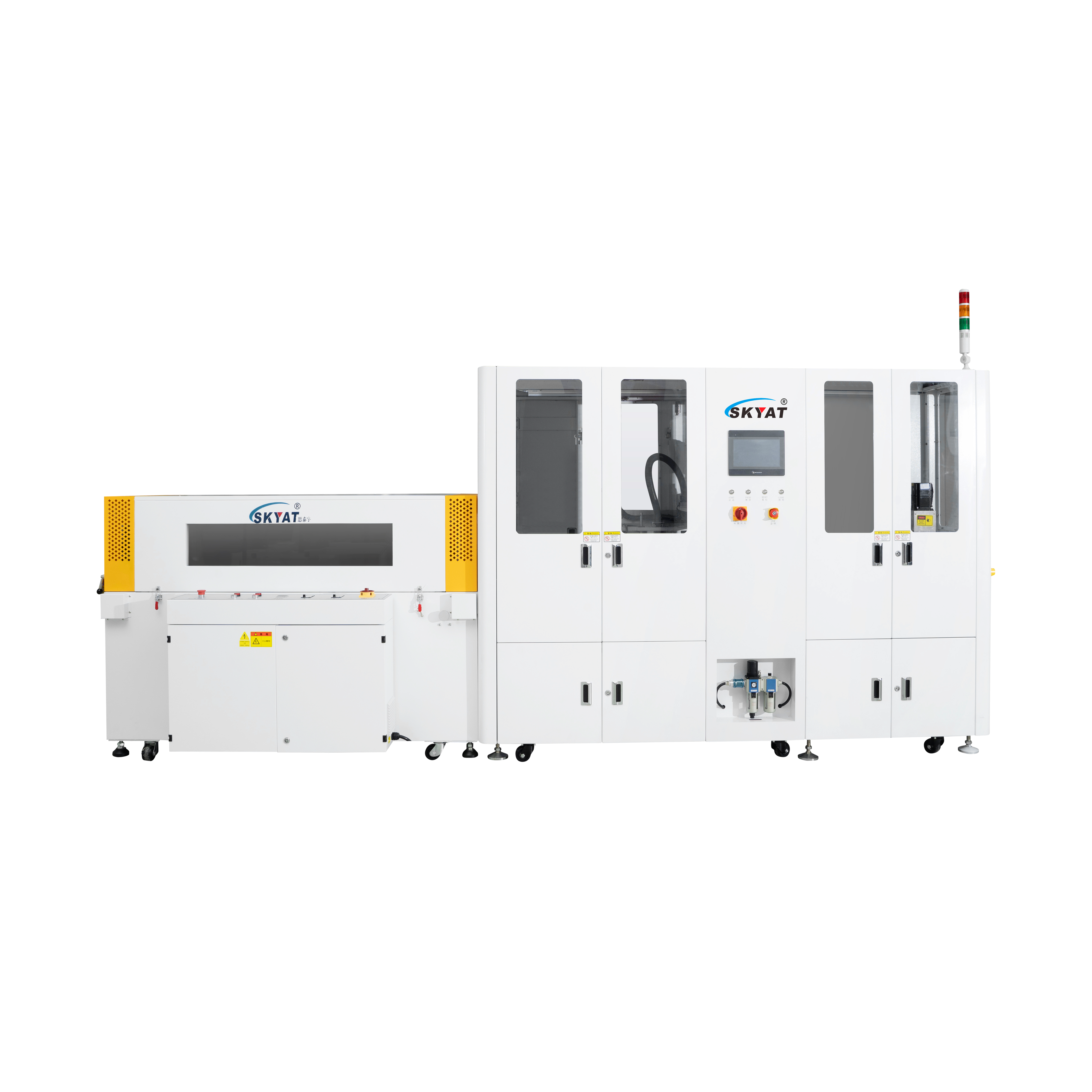
How Smart Shrink Wrapping Machines Eliminate Wrinkles Through Precision Control
Real-Time Thermal Feedback Loops for Consistent Heat Application
Modern shrink wrapping equipment comes equipped with infrared sensors that check film temperatures at intervals of around 50 milliseconds, sending all this information straight to the central control unit. The machine constantly monitors these readings and makes adjustments to different heating areas as needed. This helps avoid problems where certain parts get too hot, which can lead to inconsistent shrinking and issues on the package surface such as wrinkles or poor quality seals. For oddly shaped products, the system actually shifts how much heat goes to each section while keeping temperature differences within about 2 degrees Celsius across the whole machine. Such careful control gets rid of those pesky hot spots that have always been a problem for proper sealing and overall appearance of wrapped goods in packaging lines everywhere.
Adaptive Film Tension Control Using Closed-Loop Sensors and Actuation
When servo driven rollers work together with load cells, they keep checking how much resistance there is in the film. This lets the machine adjust tension automatically depending on what size product it's wrapping. When too much slack shows up, which tends to create those annoying wrinkles, the system kicks in extra torque pretty quickly, usually within half a second or so. What makes this different from older static tension setups is that our system keeps adapting as packages change sizes throughout production runs, all without needing anyone to manually tweak settings. Film stays tight and smooth across all shapes and curves, and we typically see around 15 to maybe even 20 percent less waste compared to traditional methods.
Synchronized Cooling Zones for Dimensional Stability and Smooth Finish
Post-shrink cooling occurs in three staged, temperature-regulated chambers—each reducing ambient heat by 25% incrementally. This graduated solidification minimizes residual stress in polymer chains, which otherwise leads to post-shrink distortion or waviness. Airflow velocity is synchronized with conveyor speed to ensure uniform film stabilization, delivering a glass-smooth, retail-ready surface finish.
Intelligent Automation Features That Define a True Smart Shrink Wrapping Machine
PLC-Guided Process Orchestration with Dynamic Temperature Mapping
The latest PLC technology has completely changed how shrink wrapping works, moving away from those old fixed batch processes to something much more flexible. These controllers look at infrared sensor readings roughly every half second and create live thermal maps throughout the entire heating area. For situations where different products are being wrapped together, say cosmetics next to metal tools for instance, the system can tell what kind of materials it's dealing with and adjust the heat distribution accordingly. This smart approach stops problems like poor shrinking on heavy items or burning sensitive products, which means no more guessing games with temperatures during setup. According to research from PMMI in their 2023 report on packaging efficiencies, this method cuts down wasted materials during setup by around 19 percent, making operations both cleaner and more cost effective in the long run.
Automatic Film Feed Calibration via Vision-Based Product Geometry Detection
The integrated 3D vision systems can grab product measurements including those tricky tapered bottles or bundles of electronics within just 0.3 seconds flat. The machine learning software then checks these measurements against thousands of verified packaging profiles, making real time tweaks to things like feed speed, tension control and cutting timing as needed. When switching from one type of item to another completely different one such as moving from shampoo containers straight into snack box production, there's no need to halt the entire line. This smart detection system stops problems with wrinkled materials caused by slack and cuts down on wasted materials by around 22 percent when compared to old school mechanical calibration techniques used in the past.
Shrink Film Compatibility: Optimizing Material Selection for Smart Thermal Control
POF, PVC, and PE—Matching Shrink Profiles to Smart Tunnel Adaptation Logic
When it comes to shrink films, there's quite a difference between Polyolefin (POF), Polyvinyl Chloride (PVC), and Polyethylene (PE). Each has its own characteristics when it comes to shrinking. POF tends to shrink pretty fast once it hits around 150 degrees Fahrenheit. PVC is trickier though because if not handled carefully during processing, it can become brittle. And then there's PE which needs much more heat, about 300 degrees actually, before it reaches proper tension levels. The good news is modern smart shrink wrappers handle all these differences automatically thanks to their built-in intelligence. These machines use infrared sensors to check the film thickness and what kind of material they're working with on the fly. Based on this information, they adjust things like how long the product stays under heat, set different temperature zones appropriately, and even manage airflow distribution. All this makes sure that whatever film type gets used will activate properly without damaging the packaging integrity.
- Over-shrinkage and puckering in PVC
- Incomplete seals in thick PE applications
- Air pockets beneath POF wraps
The outcome is consistent, high-gloss finishes across diverse substrates—along with 15–20% material savings and reliable wrinkle elimination.
Business Impact: Why Investing in a Smart Shrink Wrapping Machine Improves Aesthetics, Efficiency, and ROI
Smart shrink wrapping machines bring real benefits to businesses in several key areas. The first advantage comes from those precision thermal settings and tension controls that basically wipe out those annoying wrinkles and inconsistencies. What does this mean? Products come out looking professionally sealed, which makes them stand out on store shelves and builds trust with customers over time. Looking at automation next, these machines can boost production speed significantly without needing as much manual labor. Factories report around 40% faster output when switching to automated systems, plus there's less wasted product due to quality issues. And let's not forget about cost savings. These machines use about 12 to 15% less film material compared to traditional models, and their heating systems are designed to save energy too. Most companies find they recoup their investment in about 18 to 24 months based on what trade organizations like PMMI have been tracking for years now.
Frequently Asked Questions
What is the primary benefit of using smart shrink wrapping machines?
Smart shrink wrapping machines provide precise thermal settings and tension controls, leading to wrinkle-free packaging with professional seals and appearances.
How do smart shrink wrapping machines reduce waste?
By maintaining continuous tension and adapting to product changes, these machines can reduce film waste by about 15-20% compared to traditional methods.
Are these machines energy efficient?
Yes, smart shrink wrapping machines are designed to use less film material and adopt energy-efficient heating systems, contributing to reduced operational costs.
How quickly can companies see ROI from investing in these machines?
Most companies achieve ROI in about 18 to 24 months through increased efficiency, reduced waste, and improved packaging quality.
Table of Contents
- How Smart Shrink Wrapping Machines Eliminate Wrinkles Through Precision Control
- Intelligent Automation Features That Define a True Smart Shrink Wrapping Machine
- Shrink Film Compatibility: Optimizing Material Selection for Smart Thermal Control
- Business Impact: Why Investing in a Smart Shrink Wrapping Machine Improves Aesthetics, Efficiency, and ROI
- Frequently Asked Questions