
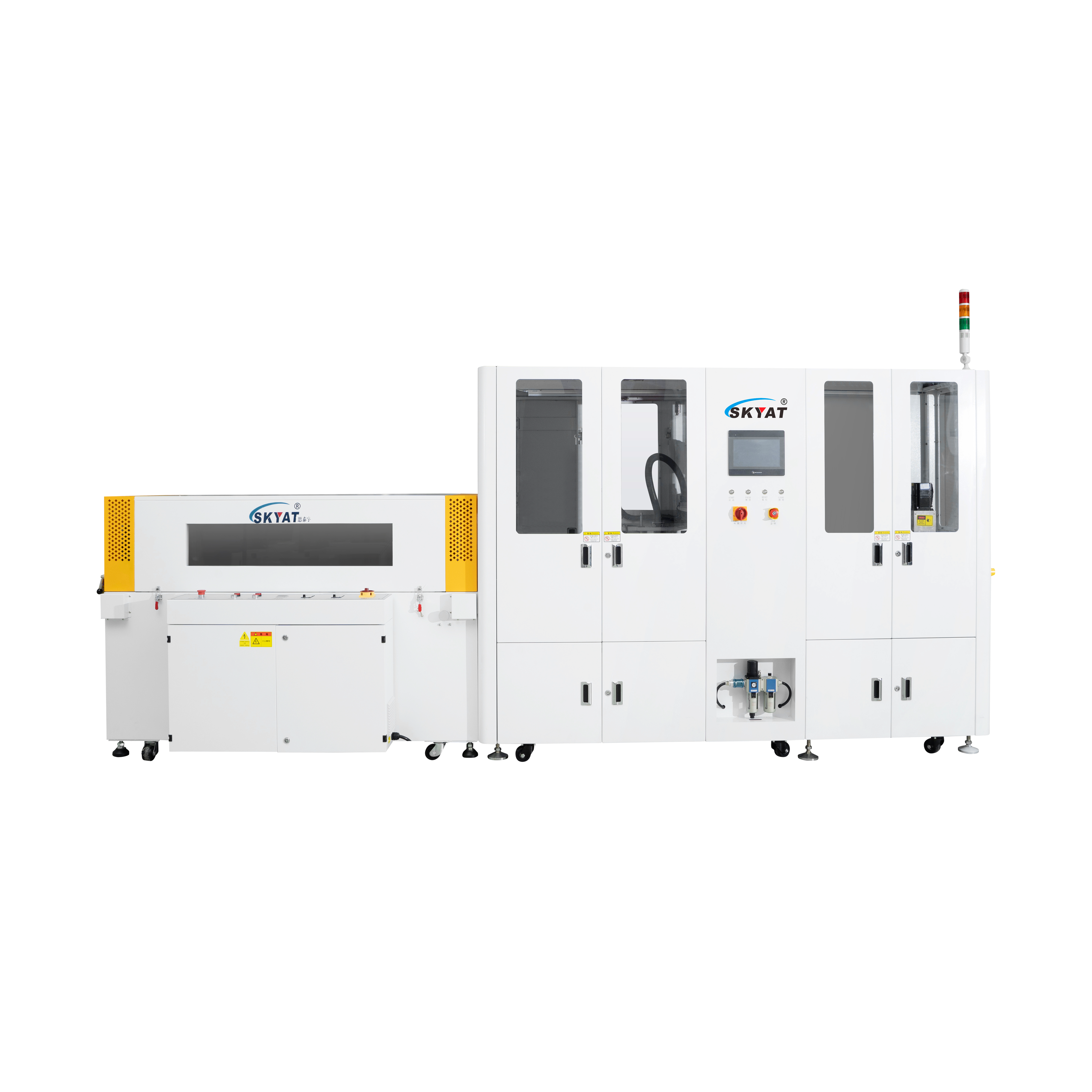
Core Engineering Principles of Heavy-Duty Wrapping Machines
Load Stability and Damage Prevention Through Structural Reinforcement
Robust structural engineering prevents product damage during transit by reinforcing critical stress points. Heavy-duty wrapping machines feature reinforced steel frames that minimize vibration during high-speed operation—maintaining load integrity across uneven surfaces. Precision-machined components ensure consistent pressure distribution, reducing pallet shift by up to 80% under ISTA 3A testing protocols. This approach eliminates point stresses that cause film tearing, especially critical for irregularly shaped industrial items. Reinforced turntable bearings and dual-motor drive systems stabilize loads exceeding 2,500 kg, while tapered roller bearings absorb lateral forces during rapid directional changes. Such enhancements correlate directly with a 42% reduction in transit damage claims (Logistics Management 2023).
Tensile Strength, Pre-Stretch Efficiency, and ISTA 3A-Validated Load Containment
Advanced wrapping machines optimize film performance through dual-stage pre-stretch mechanisms achieving 260% elongation—maximizing yield from each roll. High-tensile films (with 300%+ puncture resistance) maintain containment force despite humidity fluctuations, preventing load settlement during ocean freight. Machines certified to ISTA 3A standards demonstrate 99.5% load retention after simulated 1,500 km transport cycles—validating their suitability for e-commerce logistics. Key innovations include variable-frequency drives that adjust torque to load density, real-time tension monitoring to compensate for film thickness variations, and memory-preset stretch profiles for diverse product configurations. This engineering synergy reduces film consumption by 25% while increasing containment force by 40% compared to conventional systems—lowering material costs and environmental impact.
High-Speed Automated Wrapping Systems for Industrial Logistics
Shrink Wrapping vs. Stretch Wrapping: Application-Specific Advantages for Heavy Loads
Industrial operations require robust packaging solutions tailored to load type and transit conditions. Shrink wrapping uses heat-activated film that conforms tightly to irregular shapes—ideal for securing machinery parts or bundled items. Stretch wrapping, by contrast, relies on elastic film tensioned around palletized loads, delivering superior containment force for warehouse storage and long-haul shipping. For loads exceeding 1,000 kg, stretch systems demonstrate 30% higher load stability per ISTA 3A validation. Material choice remains decisive: shrink film provides tamper evidence, while stretch film’s memory retention sustains consistent pressure throughout extended transport.
Twin-Station Pallet Wrapping Machines: Optimizing Throughput in E-Commerce Fulfillment
High-volume distribution centers use twin-station pallet wrapping machines to eliminate bottlenecks and sustain continuous throughput. These systems support simultaneous loading and unloading, achieving over 70 pallets per hour—a 40% increase over single-station units. Features include programmable automated turntables, integrated weigh-in-motion sensors for intelligent film optimization, and flexible operation modes for mixed-SKU processing. This configuration reduces labor dependency while preserving consistent wrap tension across diverse product dimensions—making it especially valuable for e-commerce fulfillment centers facing volatile demand and dimensional variability.
Smart Innovation in Modern Wrapping Machines
Modern wrapping machines integrate smart technologies that transform packaging operations for heavy-duty applications. IoT-enabled tension control uses embedded sensors to continuously monitor film force, enabling automatic, real-time adjustments that ensure consistent load containment while minimizing waste and preventing transit damage. Predictive maintenance further enhances reliability: instead of fixed service intervals, IoT-connected systems analyze operational data using advanced algorithms to detect early signs of component wear or potential failure. Maintenance can then be scheduled during planned downtime—reducing unplanned stoppages, extending equipment life, and supporting uninterrupted industrial logistics flow.
FAQ
What is the purpose of structural reinforcement in heavy-duty wrapping machines?
Structural reinforcement minimizes vibration and maintains load integrity, reducing stress points that can cause damage during transit.
How does film pre-stretch efficiency benefit wrapping machines?
Film pre-stretch efficiency maximizes the yield from each roll, reduces film consumption, and enhances containment force, which lowers material costs and environmental impact.
What are the differences between shrink wrapping and stretch wrapping?
Shrink wrapping uses heat-activated film for irregular shapes, while stretch wrapping applies elastic film around palletized loads, offering superior containment force for heavy or large items.
What are the advantages of twin-station pallet wrapping machines?
Twin-station pallet wrapping machines optimize throughput, support simultaneous loading and unloading, and reduce labor dependency, making them ideal for high-volume e-commerce operations.
How do smart technologies enhance modern wrapping machines?
IoT-enabled systems monitor film force, adjust tension in real-time, and employ predictive maintenance to reduce waste, prevent transit damage, and improve reliability.
Table of Contents
- Core Engineering Principles of Heavy-Duty Wrapping Machines
- High-Speed Automated Wrapping Systems for Industrial Logistics
- Smart Innovation in Modern Wrapping Machines
-
FAQ
- What is the purpose of structural reinforcement in heavy-duty wrapping machines?
- How does film pre-stretch efficiency benefit wrapping machines?
- What are the differences between shrink wrapping and stretch wrapping?
- What are the advantages of twin-station pallet wrapping machines?
- How do smart technologies enhance modern wrapping machines?