
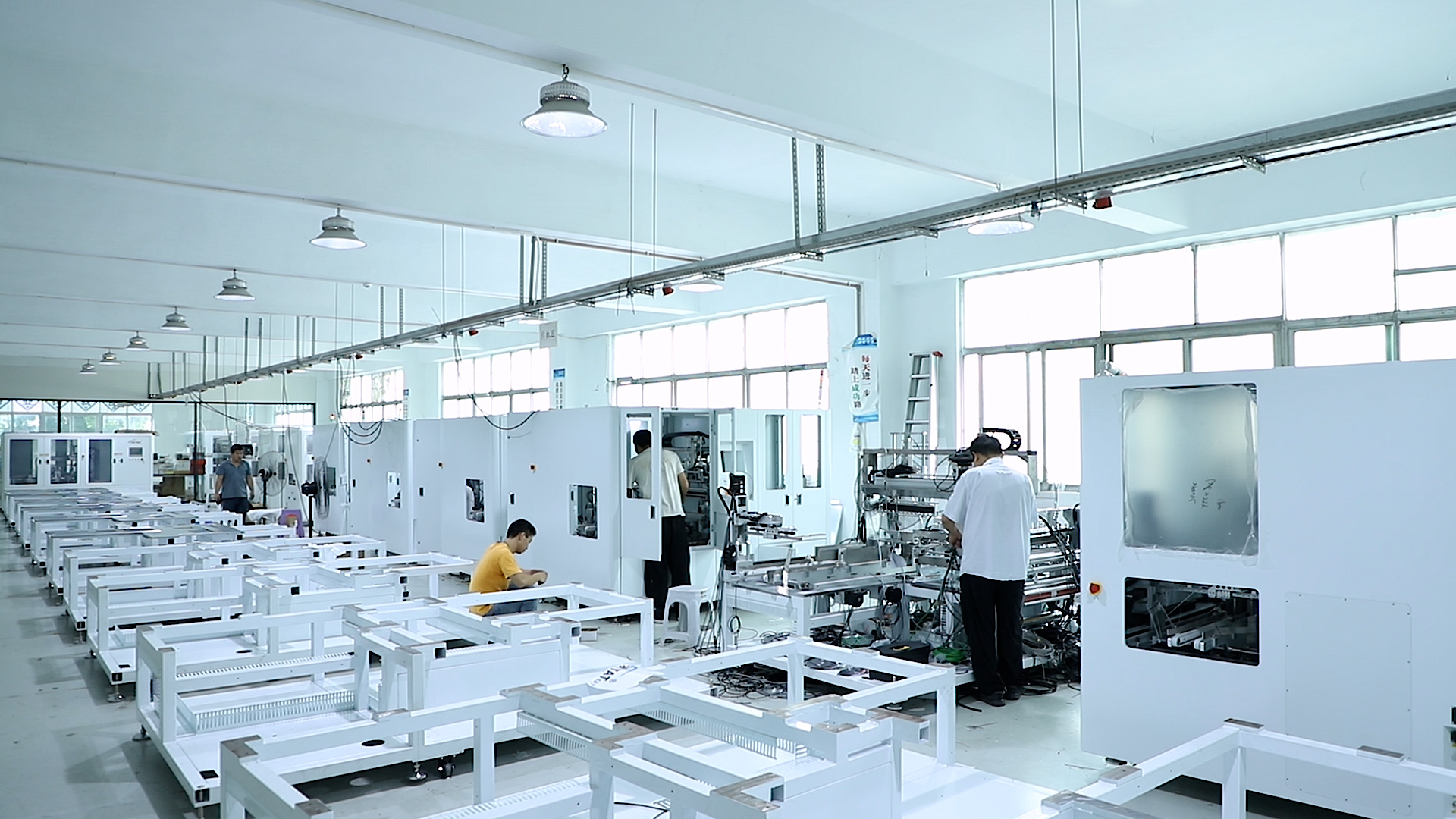
Superior Precision and Consistency with Automatic Corner Cutting Machine
How CNC Guidance Ensures Sub-Millimeter Accuracy in Every Cut
CNC (Computer Numerical Control) technology replaces manual judgment with digital precision, translating CAD blueprints into exact cutting paths. High-resolution encoders and servo motors position tools within a 0.05mm tolerance—enabling true sub-millimeter accuracy across thousands of cycles. Closed-loop feedback systems continuously monitor tool position and dynamically compensate for thermal drift or material inconsistencies, ensuring stability without operator intervention. Unlike manual processes, where fatigue or technique variability distort corner geometry, CNC programming guarantees identical angles and radii on every part. This consistency is essential for aerospace frames and electronics enclosures, where deviations beyond 0.1mm trigger assembly failures or functional compromises. Independent laser measurement audits confirm 99.8% dimensional conformity in high-volume production runs.
Reducing Rework and Scrap Through Repeatable, Programmed Corner Geometry
Predefined corner profiles eliminate guesswork—optimizing nesting layouts and enforcing precise blade engagement angles on first-pass cuts. Manual methods often yield irregular edges requiring sanding, re-cutting, or rejection; automatic corner cutting machines deliver clean 90° miters or custom angles consistently. As a result, scrap rates drop from the industry-standard 8–12% to under 2%. For aluminum extrusion shops, this reduction prevents approximately $740k in annual losses from rework and material waste (Ponemon 2023). Toolpath optimization also narrows kerf width, increasing sheet utilization by up to 15%. With self-correcting calibration, precision holds steady across 10,000+ operational cycles—removing the performance decay typical of manual tools.
Tangible Productivity Gains and Labor Optimization
Cutting Cycle Time by 35–50% While Freeing Skilled Operators for Higher-Value Tasks
An automatic corner cutting machine reduces average cycle time by 35–50% versus manual setups—driven by uninterrupted operation, elimination of fatigue-related pauses, and intelligent path sequencing. More importantly, it enables strategic labor reallocation: skilled technicians shift from repetitive cutting tasks to quality assurance, process refinement, and innovation support. One electronics manufacturer redeployed 68% of its fabrication team to R&D after automation, lifting patent filings by 23% within 18 months. This transition converts labor from a fixed cost center into a scalable growth lever—sustaining output even amid workforce constraints.
Real-World Uptime Lift: 42% Increase at Tier-1 Automotive Supplier
A Tier-1 automotive components supplier achieved a 42% gain in equipment utilization following deployment of automatic corner cutting machines. Predictive maintenance algorithms identified incipient tool wear 12–18 hours before failure—averting 83% of unplanned downtime. Simultaneously, closed-loop compensation for material variances reduced manual adjustment time by 29 minutes per shift. The net effect was an 11% quarterly increase in shipped units—without adding shifts or floor space. In just-in-time supply chains, such reliability is mission-critical: delayed components can stall assembly lines at a cost of $740k/hour (Ponemon 2023).
Significant Material Savings and Lower Total Cost of Ownership
From 8.7% to 1.3% Scrap Rate: How Automatic Corner Cutting Machine Maximizes Yield
Automatic corner cutting machines cut scrap rates from 8.7%—typical in manual metal fabrication—to just 1.3%. This 85% reduction stems from error-free execution of complex geometries, eliminating overcutting, misalignment, and inconsistent angles. For high-volume manufacturers, that translates directly into six-figure annual savings on raw materials—approximately $740k reclaimed from wasted inventory (Ponemon 2023). Algorithmic nesting further boosts yield by maximizing component count per sheet while holding ±0.1mm positional tolerance. Reduced waste also lowers downstream costs: fewer disposal fees, less energy spent on reprocessing, and diminished need for secondary finishing. Across implementations, manufacturers report 20–30% lower total cost of ownership within 18 months.
Proven Industrial Adoption Across High-Demand Sectors
Aerospace: Tight-Tolerance Corner Finishing for Structural Frames
The automatic corner cutting machine meets the uncompromising demands of aerospace manufacturing. Its CNC-guided precision delivers sub-millimeter repeatability on aluminum and titanium structural frames—critical for load-bearing wing ribs and fuselage sections. Consistent corner finishing ensures dimensional integrity within ±0.1mm, preserving aerodynamic performance and structural safety margins where manual variation is unacceptable.
Electronics Enclosures and Custom Metal Fabrication: Speed + Surface Integrity
In electronics housing and custom metal fabrication, these machines balance speed with surface fidelity. They cut fabrication time by 40–60% while delivering burr-free, micro-scratch-free corners on stainless steel and copper enclosures. That dual capability safeguards sensitive PCBs during assembly and maintains EMI shielding integrity—key requirements for 5G infrastructure and medical device chassis.
FAQ Section
How does CNC technology improve accuracy in corner cutting?
CNC technology uses Computer Numerical Control to translate CAD blueprints into precise cutting paths, ensuring sub-millimeter accuracy with tools positioned within a 0.05mm tolerance.
What are the economic benefits of using automatic corner cutting machines?
Automatic corner cutting machines reduce scrap rates significantly, enhance material utilization, and lower rework costs, leading to substantial annual savings.
Can automatic corner cutting machines replace manual methods entirely?
Yes, they offer highly accurate and consistent results without the variable quality of manual methods, while freeing skilled workers for more strategic tasks.
Is there a significant productivity increase with these machines?
Yes, cycle times are reduced by 35-50%, improving overall production efficiency and allowing labor to be reallocated to higher-value activities.